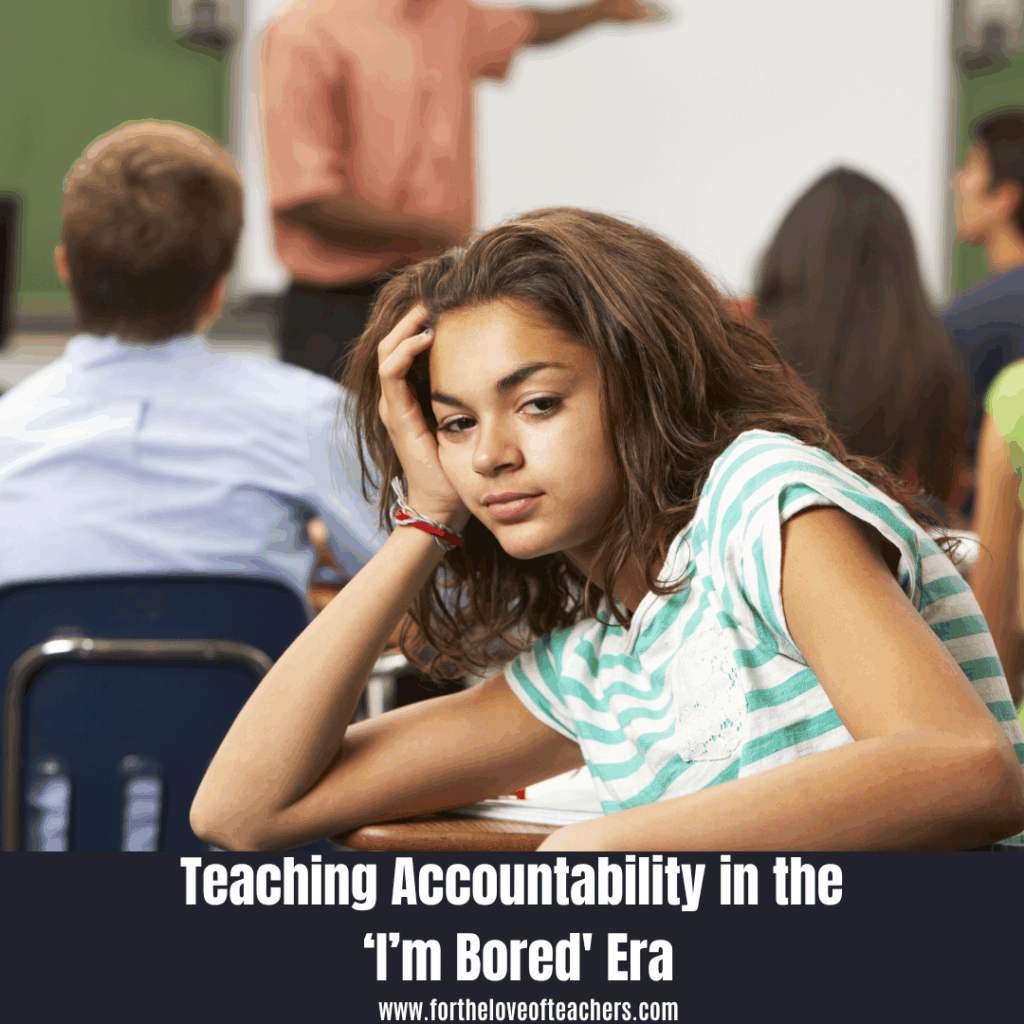
Every teacher knows that one student who always says, “I’m bored.” Not because they’re racing ahead of the class or need enrichment, but because they’re not putting in the effort to really engage. They do just enough to get by. They want the reward without the challenge. They want to be entertained instead of invested. Sound familiar?
This is a real and growing problem in classrooms, and it’s not about the lessons being “boring.” It’s about student ownership, mindset, and accountability.
So how do we help students who confuse boredom with avoidance? Let’s break it down.
1. Redefine “Bored”
Start by reframing what boredom actually means. Sometimes, “I’m bored” really means:
-
“This is hard.”
-
“I don’t want to put in the effort.”
-
“I’m afraid to be wrong.”
-
“I want attention.”
It’s rarely about the lesson itself. By talking openly about what boredom feels like and when it happens, you help students build awareness and responsibility.
💬 Try this classroom conversation starter:
“Let’s talk about what ‘bored’ really means. Are you bored because you already know this, or because it takes focus and effort?”
Teaching students to name what they’re actually feeling: frustration, confusion, or laziness. This helps them move from complaining to problem-solving.
2. Put the Ownership Back on the Student
When students say, “I’m bored,” don’t jump to fix it. Instead, turn the statement into a choice and challenge.
💬 Try responding with:
-
“Show me how you can make this more interesting for yourself.”
-
“If you’re bored, you’re not challenging your brain enough. What could you add or improve?”
-
“What’s one thing you can do to make this task more creative or meaningful?”
The goal is to make them responsible for finding engagement, not you.
3. Set Clear Expectations for Effort
Some students think “finishing fast” equals “doing well.” But racing through work isn’t the same as quality learning.
Create a class culture where effort matters just as much as completion.
💡 Teacher Tip:
Show students what “above and beyond” looks like by modeling it. For example, share two samples of work: one that’s minimal effort and one that shows deeper thinking. Then ask, “Which one do you think helps you learn more?”
Make it clear that true engagement means stretching themselves, not rushing or doing the bare minimum.
4. Provide Choices, But with Accountability
Yes, student choice increases motivation, but it only works when paired with accountability.
If a student says, “I’m bored,” offer a choice within structure:
-
“You can present your answer in writing or as a drawing.”
-
“You can read independently or record your voice explaining the text.”
-
“You can pick one of these three math challenge cards.”
This shifts their focus from boredom to ownership. They feel empowered, but they still have to meet expectations.
5. Talk with Parents About “I’m Bored” Language
Many parents hear “I’m bored” at home, too. Sometimes kids say it because they’re used to being constantly entertained or rewarded for quick completion.
When this becomes a pattern, it’s helpful to partner with families:
-
Explain that “bored” can really mean “I’m avoiding effort.”
-
Ask parents to encourage curiosity and persistence instead of quick fixes.
-
Suggest language like: “What can you do to make this more interesting for yourself?” instead of “What do you want to do instead?”
This creates consistency between home and school.
6. Celebrate Effort and Curiosity
Finally, catch students trying. Recognize the moment they go from “I’m bored” to “I tried something new.”
A little praise for risk-taking goes a long way.
🌟 Try saying:
“I love how you stuck with that even though it wasn’t easy.”
“You found your own way to make this interesting. Great job!”
The more you celebrate effort and curiosity, the less room there is for “I’m bored.”
Final Thoughts
When students claim boredom but put little effort into an activity, the real issue isn’t the activity itself; it’s their mindset. Our job isn’t to entertain them, but to empower them to take ownership of their learning.
So the next time you hear, “I’m bored,” try flipping it back with confidence: “Maybe you’re ready to challenge yourself.”
Because that’s what teaching is really about: helping students grow from passive learners to active thinkers.
🎁 Free Download for Teachers
Help your students take ownership of their learning with this free printable reflection sheet:
✨ “I’m Bored” – Teacher + Student Reflection on Effort and Engagement
Students can reflect on:
✅ What “bored” really means for them
✅ How much effort they’re putting in
✅ What they can do to challenge themselves
Sign up below to get it delivered straight to your inbox!
Thanks for reading!
If you like it, then pin it!



Christine Weis is an elementary educator and the creator of For the Love of Teachers, where she shares practical classroom strategies, engaging teaching resources, and real-life ideas to help educators create meaningful learning experiences.

Leave a Reply