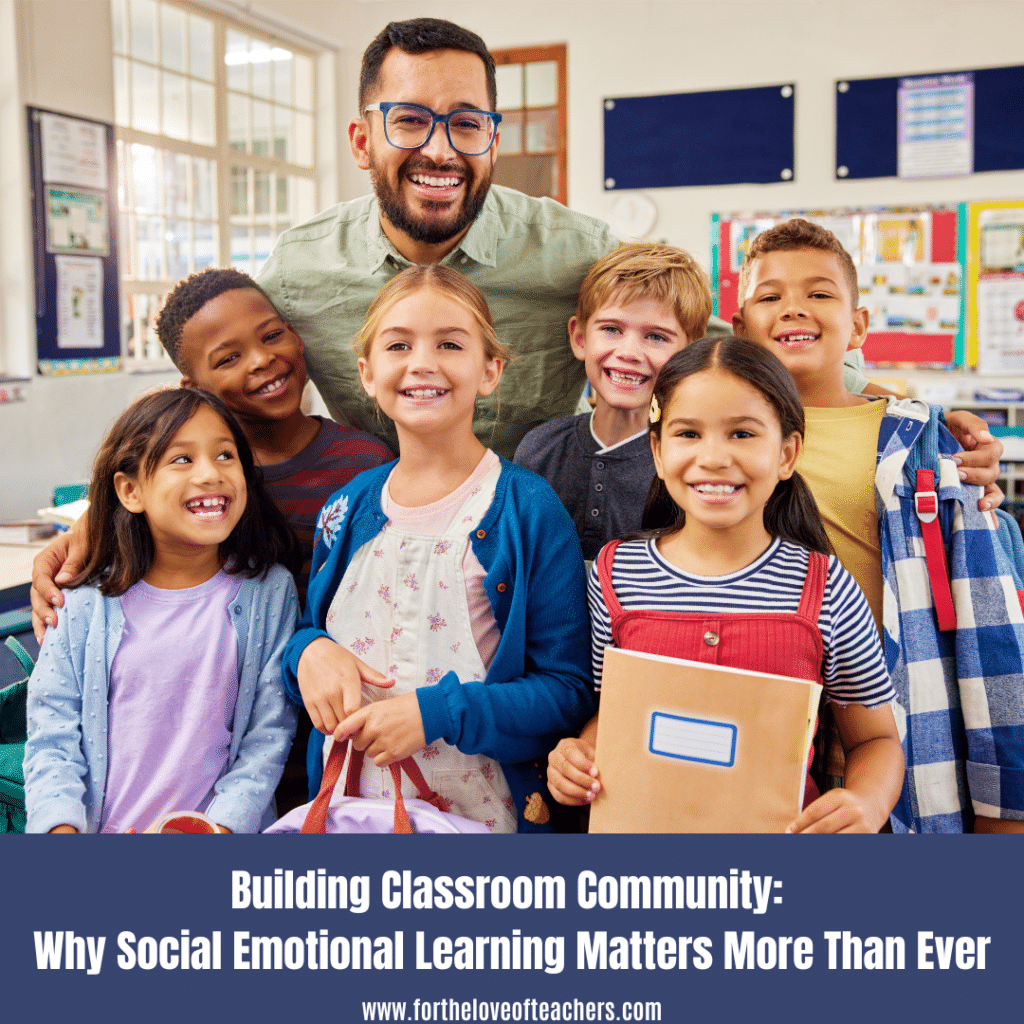
In every classroom, there is curriculum to teach, standards to meet, and skills to master. But before any of that can truly take root, something else has to exist first:
A sense of belonging.
Classroom community isn’t a “nice extra.”
It is the foundation that makes learning possible.
What Is Classroom Community?
Classroom community is the feeling that:
• I am safe here.
• I am valued here.
• I matter here.
• My voice matters here.
When students feel connected to one another and to their teacher, everything changes.
Participation increases.
Behavior improves.
Academic risk-taking grows.
Confidence strengthens.
Students are far more willing to try when they know they won’t be embarrassed for making a mistake.
Why Social-Emotional Learning Is Essential
We often talk about academic growth, but social-emotional growth drives it.
When students learn how to:
• Speak kindly
• Listen respectfully
• Encourage one another
• Recognize the impact of their words
They begin to build emotional awareness.
And that awareness transfers into:
• Group work
• Conflict resolution
• Peer collaboration
• Leadership
Social-emotional learning isn’t separate from academics; it supports them.
When students feel emotionally secure, they are more ready to learn.
Words Leave an Impact
One of the most powerful lessons I teach each year centers around the impact of words.
When students see how unkind words can leave lasting “creases,” it shifts their thinking. They begin to understand that even when we apologize, the marks may still remain.
That understanding opens the door for something more powerful:
Intentional kindness.
Teaching students to be thoughtful with their words is one of the simplest and most effective ways to strengthen classroom culture.
Community Doesn’t Happen by Accident
A positive classroom environment doesn’t just appear because we hope for it.
It requires:
• Modeling
• Practice
• Structure
• Reflection
Students need guided opportunities to:
• Give meaningful compliments
• Recognize strengths in others
• Express appreciation
• Reflect on how kindness feels
When those opportunities are intentional and structured, the impact deepens.
Classroom community grows stronger when kindness is practiced, not just talked about. It isn’t enough to tell students to “be kind.” They need structured opportunities to practice it, reflect on it, and see the impact of their words in action.
This is where classroom management and community-building truly go hand in hand. Effective classroom management is not just about rules and consequences. It’s about relationships, consistency, and creating a safe environment where students feel respected and valued. When students feel connected to their peers and teacher, behavior improves naturally. Expectations are clearer. Accountability becomes shared.
Strong classroom management supports community, and strong community strengthens classroom management.
When students learn to encourage one another, speak thoughtfully, and repair harm when needed, you’re not just building kindness, you’re building a culture. And culture is what sustains positive behavior long after a lesson ends.
The Ripple Effect of Belonging
When students feel valued by their peers, something shifts.
They walk a little taller.
They participate more confidently.
They take risks they might not have taken before.
A classroom rooted in kindness doesn’t eliminate conflict, but it creates a culture where students are more likely to repair harm, support one another, and grow together.
And that ripple effect extends far beyond the classroom walls.
Building Community Year-Round
Classroom community shouldn’t be a focus only during back-to-school season, when we’re implementing intentional relationship-building activities.
It matters:
• During transitions
• After conflicts
• Mid-year when motivation dips
• Before high-stress testing periods
• Around holidays when emotions run high
Intentional kindness practices can reset and strengthen classroom culture at any point in the year.
Small, structured moments of affirmation can have a lasting impact.
A Simple Way to Build Intentional Kindness
If you’re looking for a structured way to help students practice meaningful compliments and strengthen classroom community, I created The Full Hearts Project as a ready-to-teach kindness lesson. It includes a powerful mini-lesson about the impact of words, guided compliment writing support, and a classroom exchange where every student leaves with a heart full of encouragement.
It’s one of those activities that feels simple to implement, but the impact lasts long after the day is over. You can learn more about The Full Hearts Project kindness activity here. 💜
Thanks for reading!
If you like it, then pin it!

Christine Weis is an elementary educator and the creator of For the Love of Teachers, where she shares practical classroom strategies, engaging teaching resources, and real-life ideas to help educators create meaningful learning experiences.

Leave a Reply