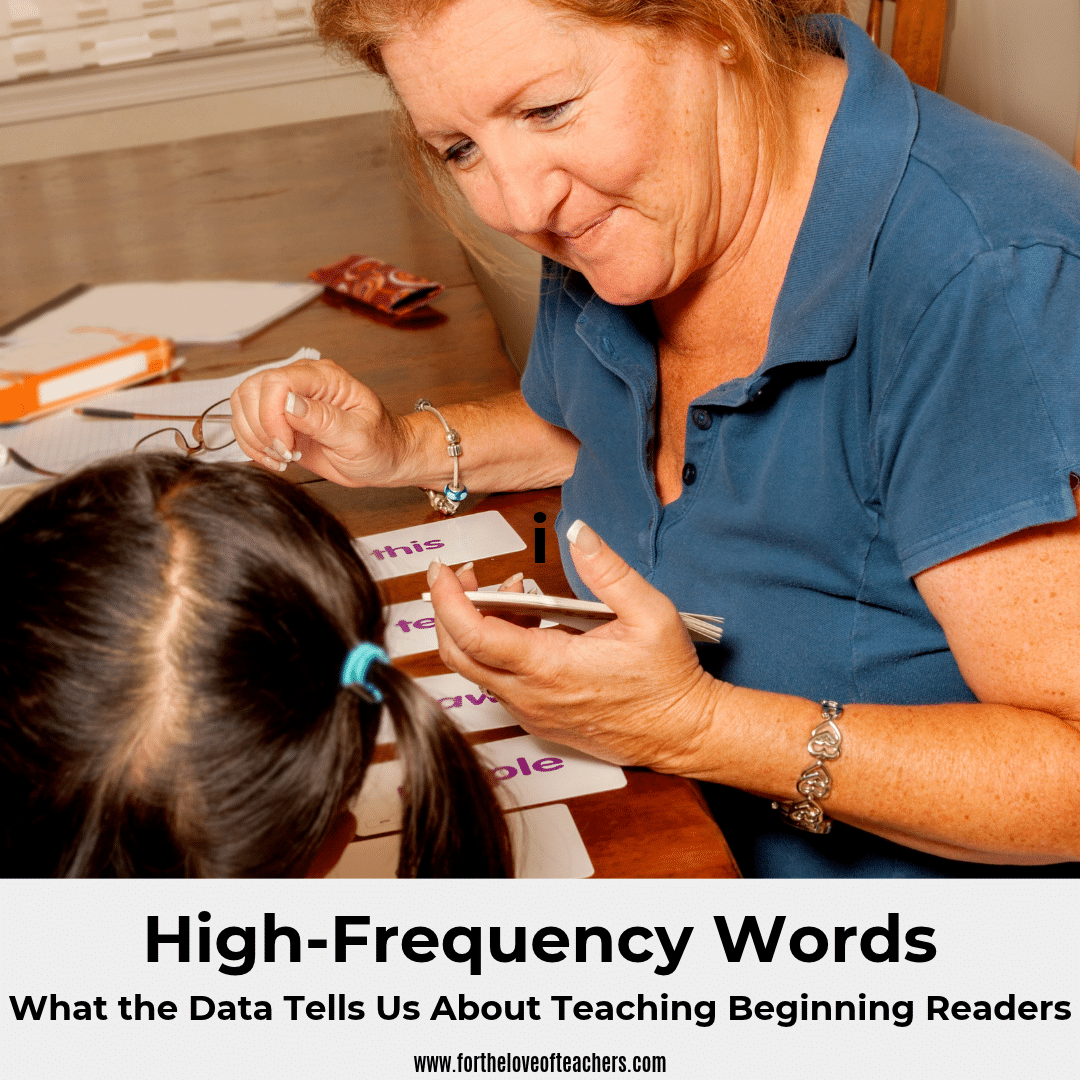
If you teach beginning English readers, you have probably worked with a list of high-frequency words. The question is how those words should be taught and when students are better served by connected text.
We looked at it from the data side. Our team builds a reading app for English learners, and we counted how much of a story the most common words account for. The numbers offer an interesting look at where a frequency list can be useful and where its usefulness begins to level off.
What We Counted and What This Is Not
The data comes from 67 short books written for English learners, ranging from beginner to advanced, with approximately 300,000 words of running text. For each book, we measured how much of the text is made up of the most common words.
An important note about the scope of these findings: These are stories written for people learning English as an additional language. They are not leveled readers for early literacy, and the data says nothing about phonics or decoding.
We counted words, not comprehension, and we did not measure whether students learned anything.
What follows is a count of which words appear in graded stories, along with a few cautious suggestions for what these findings might mean in the classroom.
The First 100 Words Are Nearly Half the Running Text
Across the 67 books:
- The 100 most common words account for 48% of the text.
- The 250 most common words account for 58%.
- The 500 most common words account for 68%.
- The 1,000 most common words account for 73%.
- The 2,000 most common words account for 82%.
Look at what each step adds.
The first 100 words give you 48 percentage points. The next 150 add about 10. The next 250 add about 10 more. To gain another 10 percentage points, you need roughly a thousand more words.
These counts are based on Lingvoberry’s free graded English word list.
The pattern is also remarkably similar at every level. In the beginner books, the first 100 words account for 52% of the text. In the hardest books in the collection, they still account for 49%.
A harder story, in other words, contains many of the same frequently occurring words along with a growing number of less common ones.
What This Suggests for the Classroom
1. Treat the First 100–200 Words as a Priority, Not a List to Memorize
These words appear in nearly every sentence students read, which is why they deserve explicit instruction and repeated practice in context, in phrases, sentences, and connected text.
Where a word is regular, such as and or it, students can apply their phonics and decoding knowledge. Words with less regular spellings, such as the, said, and was, may require more explicit attention.
That distinction comes from general early-literacy teaching rather than from our data. What our data does show is why these frequently occurring words deserve attention: students encounter them constantly.
2. Expect the Return on a Longer List to Flatten
After the first few hundred words, each new batch accounts for less and less of the running text.
The 250 most common words account for approximately 58% of the text across our books and about 66% in the beginner books.
Because we counted words rather than comprehension, these percentages do not tell us how much of a story a student understands.
What they do show is that as a frequency list grows longer, each additional group of words accounts for a progressively smaller portion of the text students encounter.
At that point, connected text gives students opportunities to encounter less common words in meaningful context.
3. Preview Character Names
This was one of the findings that surprised us most.
In these graded stories, about 6% of the text is not found on a list of 18,000 common words. About two-thirds of that, 4.2 percentage points out of 6.4, consists of character names.
A student encountering a name such as Nenad or Sanni for the first time may initially approach it as an unfamiliar or difficult word.
Taking a minute to preview and pronounce character names before reading can remove one potential stumbling block when students encounter those names in the text.
It’s a small step that may make the page feel more approachable before students even begin reading.
4. Preview the Text Before Asking Students to Read Independently
Another simple strategy is to look at the text itself before deciding whether it’s appropriate for independent reading.
Ask a student to read a page and notice which words cause difficulty. If many words are unfamiliar or difficult to decode, the text may not be the best choice for independent reading yet.
Schools and reading programs may use different guidelines for determining an appropriate independent reading level, so use the guidance your school or program recommends.
The goal isn’t to find a magic percentage. It’s to pay attention to what happens when this particular reader encounters this particular text.
5. Let Students Apply High-Frequency Words in Real Reading
After explicit instruction and practice with a set of high-frequency words, give students opportunities to encounter those words in connected text.
One simple idea, which we have not formally tested in a classroom, is to give students a short story and ask them to find and underline some of the high-frequency words they’ve been practicing.
Students get to see those words doing their job within actual sentences, while teachers can observe which words students recognize readily and which ones continue to slow them down.
The goal is not simply to recognize a word on a card. It’s to help students become increasingly comfortable encountering that word while reading.
A Frequency List Is a Map, Not a Method
A frequency list can help teachers see which words students are likely to encounter again and again. That can make it useful for deciding what to prioritize.
But a frequency list is not a method of teaching.
It also tells us relatively little about the long tail of less common words students will encounter. Those words depend heavily on the particular text a student is reading, the characters, setting, topic, and vocabulary of that book.
A frequency list can show us what’s common.
Connected reading shows students how words actually work together.
Limits Worth Knowing
As with any data set, there are important limitations to keep in mind:
- Our list counts dictionary entries (walk, rather than separately counting walked), so these numbers are not directly comparable with counts based on individual printed word forms.
- The graded stories in this collection are frequently narrated in the past tense, which influences which words appear.
- A different type of text, such as a science book, informational text, or picture book, could produce different results.
- We counted words. We did not measure comprehension or learning gains.
These findings should therefore be viewed as an interesting look at word frequency within one collection of graded English stories, not as a prescription for how beginning reading should be taught.
The Takeaway
The first few hundred high-frequency words account for a substantial portion of the running text in these graded English stories. That makes them worth prioritizing through explicit instruction and repeated practice in meaningful contexts.
But frequency alone isn’t a reading curriculum.
Teach frequently occurring words thoughtfully. Connect them to students’ phonics and decoding knowledge. Preview potentially tricky names. Pay attention to how students handle the actual text in front of them.
And then give students plenty of opportunities to read.
About the Author: Anton Kizema is the founder of Lingvoberry, a reading-based vocabulary trainer with graded books in 14 languages.
Thanks for reading!
If you like it, then pin it!
Christine Weis is an elementary educator and the creator of For the Love of Teachers, where she shares practical classroom strategies, engaging teaching resources, and real-life ideas to help educators create meaningful learning experiences.

Leave a Reply